WSC 2025 | What can clinicians and researchers do to address gender disparities in stroke care?
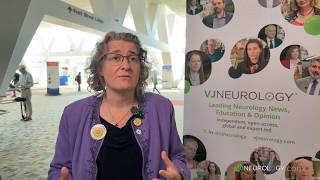
Aleksandra Pikula, MD, University of Toronto, Toronto, Canada, shares insights into what clinicians and researchers can do to address gender disparities in stroke care. Dr Pikula highlights the need for separate and defined sex and gender data in research protocols and trials, as well as the need to follow gender-specific guidelines in clinical practice. This interview took place at the 17th World Stroke Congress (WSC) in Barcelona, Spain.
These works are owned by Magdalen Medical Publishing (MMP) and are protected by copyright laws and treaties around the world. All rights are reserved.
Transcript
That’s probably the most important piece, you know, because it’s very pragmatic, you know, knowing what to do as a clinician and researcher moving forward. We advocate to make sure there is a separate and defined sex and gender data. You know, when the person is designing the research protocol or trials to make sure the trials are powered to include sex-specific analyses and representation, making sure that intersectional differences are also captured, you know, adding variables for ethnicity, indigenous status, socioeconomic markers that do impact, you know, sex and gender specific differences...
That’s probably the most important piece, you know, because it’s very pragmatic, you know, knowing what to do as a clinician and researcher moving forward. We advocate to make sure there is a separate and defined sex and gender data. You know, when the person is designing the research protocol or trials to make sure the trials are powered to include sex-specific analyses and representation, making sure that intersectional differences are also captured, you know, adding variables for ethnicity, indigenous status, socioeconomic markers that do impact, you know, sex and gender specific differences. Also rural, immigration, language, culture, crisis, exposure, all this impacts mostly women, obviously everyone, but we do see that there is some disparities in many things, in access to knowledge, care, as well as outcomes. So it’s really important to partner early with community organizations in those low-income countries, in medium-income countries, in low-resource spaces for culturally safe consent and follow-up, so to be really inclusive. And I think it’s also very important that we audit stroke pathways to make sure, you know, the trajectory of stroke care is equally distributed and affects everyone from all sex and gender and all socioeconomic status. And then, not lastly, but very important is embedding the community partnership using sex-aware AI and big data. I think that’s the piece that is probably something that we have to pay attention mostly because AI platforms are being developed, but it’s important that these data sets do include appropriate sex and gender variables. And then we can validate the models and really maintain transparency in terms of developing new models of care. And there are many other things that one can do, but I think it’s really focused around inclusive data sets for research. When we talk about clinical practice, I think it’s really important to embrace the existing guidelines that are already very well specified in terms of, you know, how to assess female-specific risks and what to do about them. But I think it’s awareness of existing guidelines that are not yet implemented by medical providers. And I think that’s very important to integrate in clinical practice. So asking about reproductive history, menopause status, adverse pregnancy outcomes, parities, and many other specific risks that we do have integrated in clinical practices.
This transcript is AI-generated. While we strive for accuracy, please verify this copy with the video.
Read more...