The Sleep Disorders Channel is supported through educational grants from Alkermes and Takeda.
VJNeurology is an independent medical education platform. Channel supporters have no influence over the production of content.
Sleep Europe 2026 | Spatial coding: is sleep a window into the brain’s hidden computations?
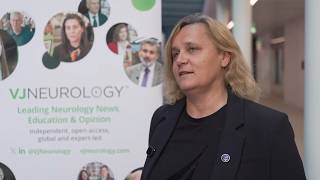
Edvard I. Moser, PhD, Norwegian University of Science and Technology (NTNU), Trondheim, Norway, discusses his work on spatial coding and how sleep can be used to study the internal dynamics of the brain. Prof. Moser explains that this approach helps access the codes the brain uses to communicate with itself, with the goal of deciphering the fundamental algorithms of how brains compute. He highlights that while this is basic research, understanding how networks of cells work in the brain may eventually help address psychiatric and neurological disorders. This interview took place at Sleep Europe 2026 in Maastricht, the Netherlands.
These works are owned by Magdalen Medical Publishing (MMP) and are protected by copyright laws and treaties around the world. All rights are reserved.
Transcript
My main message in this lecture was that we are using sleep as a way to understand the internal dynamics of the brain. What’s going on in the brain when you isolate the brain from major external sensory inputs. We do that in order to try to access the codes of the brain that the brain has made by itself, how it communicates with itself, and the overall goal is to understand, try to decipher the fundamental algorithms of how brains work, how they compute, and to use that to, in the next stage, then also to approach diseases, psychiatric diseases, neurological disorders...
My main message in this lecture was that we are using sleep as a way to understand the internal dynamics of the brain. What’s going on in the brain when you isolate the brain from major external sensory inputs. We do that in order to try to access the codes of the brain that the brain has made by itself, how it communicates with itself, and the overall goal is to understand, try to decipher the fundamental algorithms of how brains work, how they compute, and to use that to, in the next stage, then also to approach diseases, psychiatric diseases, neurological disorders. This is a long-term project, and our work is basic research, and many steps, but I do think that when we start understanding how networks or cells work in the brain, it will eventually take us to a point where we can understand diseases too, and that applies whether it’s awake or asleep. I think sleep is, for me, an approach and a way to access the hidden parts of brain computation.
This transcript is AI-generated. While we strive for accuracy, please verify this copy with the video.
Read more...