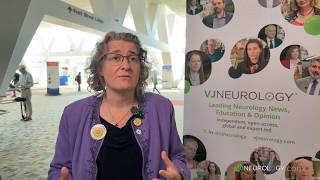
ISC 2026 | AHA/ASA 2026 guideline on acute ischemic stroke: updates regarding medical management
Shyam Prabhakaran, MD, MS, The University of Chicago, Chicago, IL, discusses updates to the American Heart Association/American Stroke Association (AHA/ASA) 2026 acute ischemic stroke guidelines, focusing on medical management. Prof. Prabhakaran highlights the importance of individualized decision-making, the introduction of tenecteplase as a treatment option, the extension of the thrombolysis window to 24 hours in select patients, and more. This interview took place at the 2026 International Stroke Congress (ISC), held in New Orleans, LA.
These works are owned by Magdalen Medical Publishing (MMP) and are protected by copyright laws and treaties around the world. All rights are reserved.
Transcript
There have been many updates to the acute ischemic stroke guidelines in 2026. Many of them focus on medical management. I’ll list out a few that I think are really important. The first is how we frame thrombolysis, thrombolysis or blood thinner administration for acute ischemic stroke. We’re really trying to ensure that mild stroke patients, those with mild deficits, are assessed for whether they’re very disabling, yet mild, or non-disabling...
There have been many updates to the acute ischemic stroke guidelines in 2026. Many of them focus on medical management. I’ll list out a few that I think are really important. The first is how we frame thrombolysis, thrombolysis or blood thinner administration for acute ischemic stroke. We’re really trying to ensure that mild stroke patients, those with mild deficits, are assessed for whether they’re very disabling, yet mild, or non-disabling. In the case of disabling, we think that thrombolysis is important and should be recommended. In the case of non-disabling, it should not be given. And actually, dual antiplatelet therapy, aspirin and clopidogrel, is preferred. That’s one framing that’s different. In addition, we are trying to help clinicians make individualized decision making for comorbid conditions that exist in ischemic stroke patients, such as if they have an aneurysm in their brain or a tumor that’s benign. In those instances, for instance, it should be still on balance, better to treat with thrombolysis than to avoid. So we’ve tried to create a little bit better framing of individualized decision-making. The big update in thrombolysis is also around tenecteplase. Tenecteplase is a drug that’s been around for a long time in cardiac, but now we have evidence from several trials that it’s not inferior to alteplase. So the two, tenecteplase and alteplase, are options that could be considered for ischemic stroke patient thrombolysis. Another big update is that we have extended the window for thrombolysis from the four and a half hour window, which is your typical window for treating patients, to extending that up to 24 hours in select patients in whom you are identifying salvageable brain tissue. And that could be relevant for rural areas, places that don’t have access to comprehensive stroke centers or thrombectomy. But in addition, it’s relevant to a lot of patients who wake up with stroke and their window started the night before. And other major medical management updates relate to what do we do about blood thinners, additional blood thinners after thrombolysis, blood pressure, and blood glucose. Let me tackle each one really quickly. Blood thinners, we know that certain blood thinners, given while you’re giving thrombolysis with alteplase or tenecteplase, is not safe and it doesn’t help. So they’re not recommended. Blood thinners outside of thrombolysis, we do know that dual antiplatelet therapy, especially if given in the first 24 hours, is very effective at preventing recurrent stroke in the first 21 to 90 days, but also can be extended to about 72 hours from onset. So dual antiplatelet therapy has been elevated a little bit more in this guideline. Blood pressure, lowering blood pressure aggressively in patients who’ve had an ischemic stroke and have been reperfused with either thrombolysis or endovascular thrombectomy. It does not seem to be beneficial in terms of improving outcomes, especially to systolic blood pressures less than 140. While blood glucose, likewise, if you try to lower blood glucose aggressively to 80 to 130, does not seem to help patients and, in fact, causes harm. So we have a mix of medical management, both expanding and very positive, and some where we’re trying to say, don’t do those things.
This transcript is AI-generated. While we strive for accuracy, please verify this copy with the video.
Read more...