ISC 2026 | Risk of recurrent stroke in phenotypically similar clusters of patients with ESUS
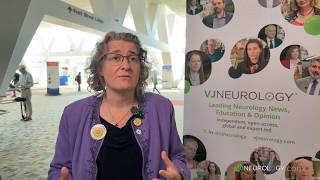
Elena Badillo Goicoechea, MS, University of Chicago, Chicago, IL, discusses a study evaluating the risk of recurrent stroke in phenotypically similar clusters of patients with embolic stroke of undetermined source (ESUS) treated with anticoagulants versus antiplatelets. The research aimed to identify potential effect modifiers, and preliminary findings suggest that characteristics such as history of cancer and left ventricular ejection fraction may drive heterogeneity in the treatment effect. This interview took place at the 2026 International Stroke Congress (ISC), held in New Orleans, LA.
These works are owned by Magdalen Medical Publishing (MMP) and are protected by copyright laws and treaties around the world. All rights are reserved.
Transcript
This was research that I presented yesterday, exploratory yet rigorous research, trying to evaluate not only the overall treatment effect of anticoagulants relative to antiplatelets in ESUS patients, but to further, because the overall effect has been relatively well established, the main results from trials have been there is no relative, there is no clear benefit of either of those two. They are statistically similar...
This was research that I presented yesterday, exploratory yet rigorous research, trying to evaluate not only the overall treatment effect of anticoagulants relative to antiplatelets in ESUS patients, but to further, because the overall effect has been relatively well established, the main results from trials have been there is no relative, there is no clear benefit of either of those two. They are statistically similar. But what we wanted to do is to estimate the effects differentially among clinically relevant or clinically different subgroups of patients. So in the first stage of the analysis, we identified what we would call clinically distinct groups of patients using clustering, of course, using only covariates at baseline. And then in the second stage of the analysis, we went ahead and estimated differential treatment effects using a causal forest model that yields a prediction, not overall, but for each patient, conditional on their values on different baseline features. And then we finally ran feature importance analysis to that second machine learning model, which is a causal forest, in order to identify certain covariates that could be driving heterogeneity in the treatment effect of AC versus AP. We concluded that there were two potential effect modifiers, but of course the evidence has to be validated in other samples and with randomized trials. Our hypothesis or like a preliminary hunch it was that different clinically different patients or patients with different clinical presentation at baseline could be impacted differently by anticoagulants versus antiplatelets. And one of the first insights of our findings is that that is not really the case because when we studied whether there was an association of cluster index and treatment effect, there was no statistical difference. There was statistical difference in the association between characteristics like history of cancer and left ventricular ejection fraction on the differential effect, but not the clustering index. So that was an interesting thing to see.
This transcript is AI-generated. While we strive for accuracy, please verify this copy with the video.
Read more...