WSC 2026 | Beyond FAST: adapting stroke 1-2-0 for the Chinese population
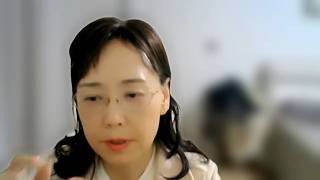
Jing Zhao, MD, PhD, Minhang Hospital, Fudan University, Shanghai, China, discusses the Stroke 1-2-0 public education program, which was updated to “Stroke 1-2-0, Stroke 1-2-0” to better address the needs of the Chinese population. Dr Zhao highlights that the original program, launched in 2016, was designed to overcome the limitations of the FAST mnemonic in China, and the updated version aims to improve recognition of less typical stroke symptoms, such as dizziness and sudden vision loss, and to emphasize the importance of immediate action. This interview took place at the 18th World Stroke Congress (WSC) in Seoul, Korea.
These works are owned by Magdalen Medical Publishing (MMP) and are protected by copyright laws and treaties around the world. All rights are reserved.
Transcript
Stroke 120 is our stroke public education program in China. We first published this concept in Lancet Neurology back in 2016. Then we launched the Stroke 120 campaign. We found that the FAST mnemonic doesn’t work well in China. FAST is built on English words. It is hard for Chinese people to remember and understand. That is why we designed Stroke 120. Because 120 is the Chinese emergency number, so the rule is easy to remember: one means check one side of the face to see if it drops, two means check two arms to see if one arm is weak or cannot stay up, zero equals listen in Chinese, reminds people to call 120, and the Chinese emergency number right away...
Stroke 120 is our stroke public education program in China. We first published this concept in Lancet Neurology back in 2016. Then we launched the Stroke 120 campaign. We found that the FAST mnemonic doesn’t work well in China. FAST is built on English words. It is hard for Chinese people to remember and understand. That is why we designed Stroke 120. Because 120 is the Chinese emergency number, so the rule is easy to remember: one means check one side of the face to see if it drops, two means check two arms to see if one arm is weak or cannot stay up, zero equals listen in Chinese, reminds people to call 120, and the Chinese emergency number right away. Many old health campaigns only test whether people know stroke symptoms, but knowing is not enough; people may learn the science and still wait, or drive the patient to the hospital by themselves. This is a big “no-do” gap. So we ran a multi-layered public education campaign in Xinchang in Shanghai. We used videos, posters, local TV broadcasts, community lectures, and school outreach together. We also used a family model. Students learn Stroke 120 at school and teach their parents and grandparents. This works very well in China. And we published the results in the JAMA Network Open. The results are very clear. Before this campaign, the rate of patients who arrived in the hospital within the three-hour golden window went up from 5.8% to 33.4%, and the median pre-hospital delay drove it sharply from 18 hours down to 6 hours. And these numbers prove our program works on two levels. It helps people to learn the symptoms, and more critically, it changes what people actually do when a stroke happens. More stroke patients called an ambulance directly, and more patients reached the hospital within the golden time window to get life-saving treatment. So, Stroke 120 is now widely recommended in China’s stroke guidelines. It tells us that good public education must measure two things. One is how many people understand stroke, and the other is whether they can act quickly when a stroke happens. Knowledge is only useful when it turns into action.
The new slogan is Stroke 120 Stroke 120. This is an upgrade, not a replacement of the old one. We also found that “Be Fast” doesn’t work well in China either. “Be Fast” is another English-based mnemonic. It is long and difficult for Chinese people to learn and spread widely. The original Stroke 120 focuses on three common signs of front brain stroke: face, arm, and unclear speech. It works well for most strokes, but it misses posterior circulation stroke. This kind of stroke often brings dizziness, balance trouble, sudden blurry vision, or double vision. The patient’s face and arms may look normal, but many people ignore these warning signs and wait too long. That is one key reason for this update. And the second reason is the “no-do” gap we’re just talking about. Many people can recite Stroke 120 but they hesitate to call for help. Repeating the slogan builds a stronger memory and pushes people to act. So what is the difference? The old short version is quick and simple for basic training, and the repeated new version keeps the three classic signs and also reminds people of those less typical stroke symptoms, like sudden vision loss or balance problems. We also can explain this in this way: the first Stroke 120 means check and recognize a possible stroke, the second Stroke 120 means call 120 immediately, no delay. It makes a clear two-step loop: recognize, then act. We still use the original short version for fast medical training, and the repeated slogan is better for videos, posters, and mass public campaigns to catch most stroke types that need urgent action.
This transcript is AI-generated. While we strive for accuracy, please verify this copy with the video.
Read more...