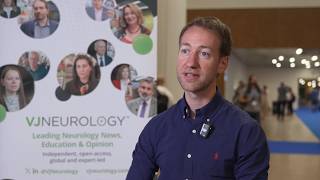
My name is Ali Habib and I’m a clinical professor of neurology at the University of California, Irvine in California. CAR-T is a very interesting therapy in myasthenia in terms of potential, primarily because the way we think about myasthenia is that the role of the B-cell in the pathophysiology of myasthenia is very central. And we’ve over the years and decades used different therapies that have modulated T-cell and B-cell function and this has led to therapeutic success and improvement in the majority of patients that we treat...
My name is Ali Habib and I’m a clinical professor of neurology at the University of California, Irvine in California. CAR-T is a very interesting therapy in myasthenia in terms of potential, primarily because the way we think about myasthenia is that the role of the B-cell in the pathophysiology of myasthenia is very central. And we’ve over the years and decades used different therapies that have modulated T-cell and B-cell function and this has led to therapeutic success and improvement in the majority of patients that we treat. However, the therapeutic landscape in myasthenia has been evolving particularly over the last couple of decades. So whereas we had therapies that were things along the lines of steroids and non-steroidal immunosuppressants, they’re very effective, but they take a very long time to work in myasthenia. And oftentimes it’s a race against time in myasthenia because the early disease is where things are most active and patients can have flare-ups. But nonetheless, we did a good job with these therapies and controlling disease. But they also come with a plethora of side effects, particularly steroids. So in the past seven or eight years, the field has certainly had advancements where a lot of new therapies have come about that we refer to collectively as targeted therapies that have certain advantages over the previous therapies such as faster onset of action, better safety, better tolerability, and the ability to use over time. But both of these groups of therapies still require ongoing therapy or at the very least intermittent therapy. And so there is room for improvement in that. So the possibility of having very intermittent therapy or potentially even a single-time therapy such as CAR-T is very exciting. Not only from the standpoint of the dosing, but also from preventing or saving patients from the long-term use of immune suppressants, which again, not only from the side effects, but also what are the consequences of that chronic immune suppression in these patients. Additionally, a lot of these therapies target very specific parts within the myasthenia pathophysiology, mostly downstream. CAR-T holds the promise of an upstream mechanism of action and really potentially affecting multiple pathways in disease pathophysiology. So there have been several different therapies that have been coming about in the myasthenia space specifically, along with other autoimmune diseases like myositis. In the neuromuscular space, myasthenia leads the field. And these therapies have spanned from things like the RNA-based CAR-T therapies, DNA-based CAR-T therapies, both of them primarily targeting the CD19 or the BCMA cell targets in B-cells. Most of these therapies are still in early phase development with the one exception of the BCMA RNA-based CAR-T, which is now going into a Phase III trial. In general, what’s been good to see in the autoimmune space in particular and also holds true for myasthenia is that a lot of the really severe side effects that are associated with CAR-T therapy, such as cytokine release syndrome and ICANS, have been very limited thus far in the experience with CAR-T therapies in myasthenia. So both from the standpoint of safety and tolerability, as well as from what we’ve seen, the depth of response in terms of disease control and the durability of that response over time has been really good to see in myasthenia. So more to come as the trial space matures and more therapies come into Phase III trials. Patient selection is really key here because these are new therapies coming into play. So I think the type of patients that you want are patients who have clear disease burden, clear activity of disease. They are generally well-defined in terms of their antibody status. So in myasthenia, the CAR-T space, like other trials that have come about, are primarily selecting towards patients who have acetylcholine receptor antibody myasthenia, which is the majority of generalized myasthenia, or the MuSK antibody-positive myasthenia, which is a smaller proportion of all patients with generalized myasthenia. Typically, these patients are also required to have undergone other conventional or standard of care therapies and have not had an adequate response to those therapies which then makes them eligible for participation in the CAR-T trials. There’s all kinds of things going on in the cell therapy-based direction for myasthenia. So as we talked about CAR-T is one of them. There are other therapies such as the bispecific coming in. There is another very novel approach in terms of building immune tolerance in myasthenia. That’s a very interesting and exciting approach where it’s not driven by any immune suppression or immune modulation in the classical terms, but really building up tolerance and preventing myasthenia. So those are some really interesting things. And then even from the conventional therapy standpoint, there have been some really big developments in the field of myasthenia. Most recently, just four years ago, we had the publication of the inebilizumab trial in myasthenia, which showed promising results, both in terms of efficacy as well as safety and tolerability. So a lot happening in the space of myasthenia.
This transcript is AI-generated. While we strive for accuracy, please verify this copy with the video.