WSC 2026 | OCEANIC-STROKE: applying asundexian trial results to individual patients
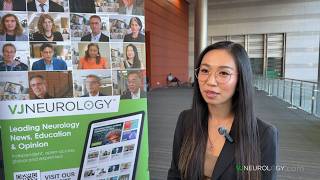
Mike Sharma, MD, MSc, FRCPC, McMaster University, Hamilton, Ontario, Canada, discusses how to apply the results of the Phase III OCEANIC-STROKE trial (NCT05686070) of asundexian to individual patients after non-cardioembolic ischemic stroke or high-risk transient ischemic attack (TIA). Prof. Sharma explains that the overall trial effect is the best estimate for any individual, and that clinicians should consider whether enough similar patients were represented in the trial. He also shares recommendations for approaching secondary prevention in subgroups of patients who were not included in the trial. This interview took place at the 18th World Stroke Congress (WSC) in Seoul, Korea.
These works are owned by Magdalen Medical Publishing (MMP) and are protected by copyright laws and treaties around the world. All rights are reserved
Transcript
You know, when we look at a trial result, it’s a summary from the entire population. One of the things we tried to do in OCEANIC-STROKE is make the population broad so that people could see individuals within the population in the trial. So I think, you know, in a trial publication, the most important table is Table 1, which is the baseline data. It gives you an idea of the range and proportions in terms of age, in terms of sex, in terms of past history...
You know, when we look at a trial result, it’s a summary from the entire population. One of the things we tried to do in OCEANIC-STROKE is make the population broad so that people could see individuals within the population in the trial. So I think, you know, in a trial publication, the most important table is Table 1, which is the baseline data. It gives you an idea of the range and proportions in terms of age, in terms of sex, in terms of past history. And the question really isn’t whether that exact patient is represented, but if there are enough of them to give you confidence that the summary effect applies to that individual. Now, in general terms, the best effect size estimate for any subgroup, including an individual, is the overall trial effect. As an example, we’ve made this mistake before. One of the initial trials of aspirin in stroke prevention, which was a Canadian trial, concluded that it didn’t work in women. That wasn’t true. There simply weren’t enough women in the trial to give you a statistically significant result. We’ve learned since then. So when confidence intervals for subgroups cross the null, it doesn’t matter that it doesn’t work. It just wasn’t powered for that. So really what you want to do is think of the person before you. Think of whether enough of that type of person, in terms of age, in terms of risk factors, in terms of type of stroke, is represented in the trial to give you confidence. If they’re not represented, still the best estimate is the overall trial effect.
So we did do a trial in cardioembolic stroke, which is OCEANIC-AF, and that trial unfortunately showed that asundexian was not as effective as apixaban. So for types of stroke where anticoagulation is indicated, they should be treated with guideline-based anticoagulants and not placed on asundexian. So this trial applies only to people who have non-cardioembolic stroke. Now, one of the trial inclusion criteria that I’m often asked about is we randomize people within 72 hours of symptom onset. And the question is, if you’re later than 72 hours, do the results still apply? Now, what I can tell you, and again, this is my opinion looking at the data, is that we see the effect continuing as long as we follow people. What that means is it’s not the case that after some period of time, the effect wears off. For instance, in the dual antiplatelet trial results, after about seven days, certainly by 21 days, it doesn’t seem to be an ongoing effect. So in terms of time since symptom onset, we think that if the stroke was recent for the TIA, it probably still applies. Cardioembolic strokes use guideline-directed therapy.
This transcript is AI-generated. While we strive for accuracy, please verify this copy with the video.
Read more...

Disclosures
Consultant: Bayer, Regeneron, Anthos; Speakers Bureau: Bayer; The institution of Dr. Sharma has received research support from Bayer.