WSC 2025 | Inflammation as the new target for improving outcomes in ICH
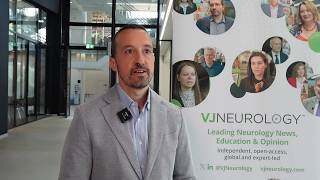
Aristeidis Katsanos, MD, PhD, McMaster University, Hamilton, Canada, discusses inflammation as a new target for improving outcomes in intracerebral hemorrhage (ICH). He highlights the limitations of current treatment approaches and the potential of targeting inflammation to improve outcomes for patients. This interview took place at the 17th World Stroke Congress (WSC) in Barcelona, Spain.
These works are owned by Magdalen Medical Publishing (MMP) and are protected by copyright laws and treaties around the world. All rights are reserved.
Transcript
Yeah, so patients with ICH are at significant disadvantage. They have a lot of high risk of cardiovascular events and they also don’t do well. So more than two-thirds of the patients, they have long-lasting disabilities after the ICH. So there have been many medications that have been tried in those people. The main drawback is that after the bleeding in the brain, we have to stop many of the medications...
Yeah, so patients with ICH are at significant disadvantage. They have a lot of high risk of cardiovascular events and they also don’t do well. So more than two-thirds of the patients, they have long-lasting disabilities after the ICH. So there have been many medications that have been tried in those people. The main drawback is that after the bleeding in the brain, we have to stop many of the medications. So we have to stop antithrombotics. Sometimes we have to stop also statins, which decrease cholesterol. So what happens is that many of those patients, they get a cardiovascular event, whether it’s a new stroke or a heart attack, or they die in the very first months after they have the intracranial hemorrhage. So inflammation, we do see this as kind of an opportunity. I call it like a backdoor, and I’ll explain myself more about it. So it’s a backdoor because if it is proven to be efficacious, this pathway, so what you can do is you can start your intervention early on without increasing the risk of bleeding, decreasing the risk of cardiovascular events and ultimately improving patient outcomes.
This transcript is AI-generated. While we strive for accuracy, please verify this copy with the video.
Read more...