AAN 2026 | CBD improves neuropsychiatric symptoms in tuberous sclerosis complex: EpiCom trial insights
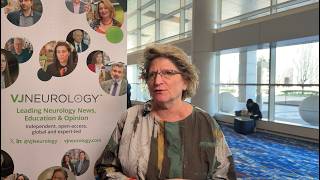
Elizabeth Thiele, MD, PhD, Massachusetts General Hospital, Boston, MA, discusses interim findings from the Phase III/IV EpiCom trial (NCT05864846) evaluating pharmaceutical-grade cannabidiol (CBD) in patients with tuberous sclerosis complex (TSC) who experience seizures. Results show promising improvements in neuropsychiatric symptoms, alongside reduced seizure frequency and a favorable safety profile, highlighting CBD’s potential beyond seizure control. This interview took place at the 78th American Academy of Neurology (AAN) Annual Meeting in Chicago, IL.
These works are owned by Magdalen Medical Publishing (MMP) and are protected by copyright laws and treaties around the world. All rights are reserved.
Transcript
So I’m very excited about the EPICOM trial, which is looking at add-on pharmaceutical-grade purified CBD or cannabidiol in patients with tuberous sclerosis complex who have a history of seizures or are on an anti-seizure medication. Epilepsy is very common in patients with TS, affecting about 85% of people. But the neurobehavioral neuropsychiatric aspects of TS are more common, in fact, about 90%...
So I’m very excited about the EPICOM trial, which is looking at add-on pharmaceutical-grade purified CBD or cannabidiol in patients with tuberous sclerosis complex who have a history of seizures or are on an anti-seizure medication. Epilepsy is very common in patients with TS, affecting about 85% of people. But the neurobehavioral neuropsychiatric aspects of TS are more common, in fact, about 90%. So it’s the most common symptom of TSC. And it’s oftentimes the most impactful for the person living with TSC and their family. When we were doing the epilepsy trials with purified CBD and seizures associated with TSC, we anecdotally saw anxiety getting better, OCD getting better, et cetera. And that’s what led to the EPICOM trial. And why I’m so excited about it is it’s the first trial looking at this aspect of TSC. There have been a couple of epilepsy trials, trials on other organ involvement, but this is the first looking at the neurobehavioral aspects. So what I presented at the AAN was a six-month kind of data from the six-month kind of study, so an interim analysis. And what we saw is really promising. So I’m looking forward to the formal results of the study. Patients who enrolled in the study had to have TSC and be between the ages of 1 and 65, had to be on a seizure medication, have seizures, and have to have moderate to severe TAND or TSC-associated neuropsychiatric disorder, identified by their caregiver. And for each patient, there was a most problematic behavior, and other questionnaires were followed as well, including the TAND SQ, which is a questionnaire designed and validated specifically to look at this aspect of TS. After a trial and baseline period, patients were titrated on CBD, and then at 13-week analysis and 26-week analysis, and then the 26-week analysis, different questionnaires were completed by the caregiver, including the TAND SQ, including the Aberrant Behavioral Checklist, and including a patient interview with a caregiver interview with the physician. And we saw really promising results. There were improvements in the TAND SQ scores. There were improvements in the Aberrant Behavioral Checklist. And over 70% of caregivers said that they felt that their family member in the study had significantly benefited and chose to stay on. We also saw that those people in the study who were having active seizures had a reduction in seizures, as was seen in the clinical trial for epilepsy. And we also saw the safety and tolerability of CBD in this trial was very similar to what was also seen in the RCTs. So overall, I’m pretty wicked excited about it. Again, first trial looking at this aspect of TAN and TSC, which again, for many people living with TS, is the most significant aspect of the disorder.
This transcript is AI-generated. While we strive for accuracy, please verify this copy with the video.
Read more...

Disclosures
Dr. Thiele has received personal compensation in the range of $5,000-$9,999 for serving as a Consultant for GW Pharma/Jazz. Dr. Thiele has received personal compensation in the range of $5,000-$9,999 for serving as a Consultant for zogenix/UCB. Dr. Thiele has received personal compensation in the range of $500-$4,999 for serving as a Consultant for nobelpharma. Dr. Thiele has received personal compensation in the range of $500-$4,999 for serving as a Consultant for Biocodex. Dr. Thiele has received personal compensation in the range of $500-$4,999 for serving as a Consultant for Stoke Therapeutics. Dr. Thiele has received personal compensation in the range of $500-$4,999 for serving as a Consultant for livanova. Dr. Thiele has received personal compensation in the range of $5,000-$9,999 for serving as a Consultant for Noema Pharma. Dr. Thiele has received personal compensation in the range of $500-$4,999 for serving as a Consultant for pyros pharmaceutical/upsher smith. Dr. Thiele has received personal compensation in the range of $500-$4,999 for serving on a Scientific Advisory or Data Safety Monitoring board for Marinus Pharmaceuticals. The institution of Dr. Thiele has received research support from GW Pharma/Jazz. The institution of Dr. Thiele has received research support from Zogenix/UCB. The institution of Dr. Thiele has received research support from Stoke Therapeutics. The institution of Dr. Thiele has received research support from Biocodex. Dr. Thiele has received publishing royalties from a publication relating to health care.