ISC 2025 | The development of the AHA Skilled Nursing Facility Stroke Rehabilitation Certification
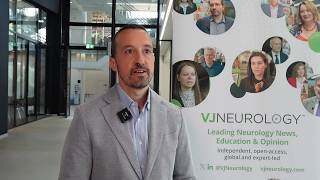
Richard D. Zorowitz, MD, member of the American Heart Association Skilled Nursing Facility Stroke Rehabilitation Certification Committee and chief medical informatics officer, program director of the Brain Injury Fellowship, vice president of the Medical Executive Committee, chair of the Credentials Committee and professor of clinical rehabilitation medicine at Georgetown University School of Medicine, comments on the development of the American Heart Association (AHA) Skilled Nursing Facility Stroke Rehabilitation Certification. The certification aims to standardize stroke rehabilitation care by establishing six key areas: care coordination, quality improvement, patient and caregiver education, patient care, program management, and personnel education. Dr Zorowitz notes that this certification raises the bar on patient care and hopefully ensures stroke survivors receive the best possible rehabilitation outcomes. This interview took place at the 2025 International Stroke Conference (ISC), held in Los Angeles, CA.
These works are owned by Magdalen Medical Publishing (MMP) and are protected by copyright laws and treaties around the world. All rights are reserved.
Transcript
The certification was developed out of a need to be able to standardize the way that stroke survivors are being treated during rehabilitation. In the United States, as I’m sure you’re aware, the continuum of care is rather disjointed. We have acute care, we have inpatient rehab, we have skilled nursing facilities, we have home care, we have outpatient therapies. All of these things are in different environments and every time a patient goes from one place to the next, they end up with different therapists...
The certification was developed out of a need to be able to standardize the way that stroke survivors are being treated during rehabilitation. In the United States, as I’m sure you’re aware, the continuum of care is rather disjointed. We have acute care, we have inpatient rehab, we have skilled nursing facilities, we have home care, we have outpatient therapies. All of these things are in different environments and every time a patient goes from one place to the next, they end up with different therapists. And so the continuity isn’t always that great and the way that people are treated isn’t always the same among the different environments. So in this case, the need really came, especially in rural states who depend a lot more on skilled nursing facilities rather than inpatient rehabilitation facilities for the rehabilitation of stroke survivors. There are standards for rehab for inpatient rehabilitation facilities, but really nothing was out there for skilled nursing facilities. So we took this on, one, to meet the need to increase the standard of care for our stroke survivors. But number two, we also did it in skilled nursing facilities since a lot of rural states and others too may depend on skilled nursing facilities to have their stroke survivors get their rehab. The certification basically has six different parts. One is, the first is care coordination, which is really the infrastructure. And that involves basically doing an interdisciplinary committee that’s going to run the program. This includes the physicians, the therapists, nurses, psychologists, anybody else who happens to be a part of that program in that facility. As part of that, we want to have a stroke champion, somebody who really is passionate and wants to really move the program forward and increase the bar of treatment that is provided to stroke survivors. Next is quality improvement. Quality improvement essentially looks at that circle of evaluating your program, seeing what are the strengths, what are the weaknesses, and how to make it better over time. As we like to say, practice makes perfect, and it just takes a long time. And it should be an ongoing process to make sure your program is always up to date, cutting edge, and providing the best possible care. The next section is patient and caregiver education. This includes determining on a program level, what are the things that you want to be able to teach your patients and caregivers so that they can get appropriate care when they go home. The technique that we try to use is a teach-back technique where we teach the patient and the caregiver, and then they basically demonstrate back to us that they know what we have taught them so that they potentially could teach it to other people who might have to provide care to that stroke survivor. Next is patient care, and that includes all the different aspects of rehab and medical care that’s required of stroke survivors and making sure those standards are as up-to-date as we can make them. So that may include bowel and bladder management, wound care, things along those lines, spasticity, things along those lines that basically are sort of the nuts and bolts of rehabilitation care and making sure that the way that we’re doing that, and especially in therapies, that are standardized and will provide hopefully the best outcomes possible. Next really is program management. And again, I mean, what that really has to do with is just making sure that everything is running well with the program, that patients, when they’re going from place to place, whether it’s coming in from an acute care hospital or going out to some other facility or outpatient setting, that the information that is being provided is going to be appropriate and give caregivers and professionals the best possible information to take care of that stroke survivor. And then finally is personnel education. So not only do we teach the patients and the caregivers, but we also want education of the people who are providing the care. So again, that they have the most up-to-date information to be able to provide to their patients so that they get the best possible rehabilitation that they can. So these are the six different areas that are included as part of the certification. The basic answer is it raises the bar on patient care. One, we want to make sure that patients are getting the best possible care that they can so that they get the best possible functional outcomes that you can expect from them. And by doing that, it keeps the program itself up to date with what are the newest information that we need to be able to provide the best possible care for our patients.
This transcript is AI-generated. While we strive for accuracy, please verify this copy with the video.
Read more...