WSC 2026 | Bridging the gap between stroke care guidelines and practice across Asia-Oceania
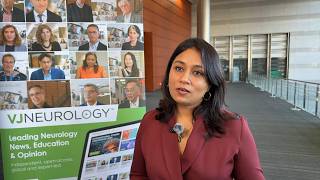
Ivy Sebastian, MD, DM, Christian Medical College & Hospital, Ludhiana, India, comments on the gap between guidelines and practice in stroke care across Asia-Oceania, highlighting the need for equal access to time-critical stroke care. Dr Sebastian emphasizes the importance of establishing reliable referral pathways, such as hub-and-spoke models, to ensure that all patients receive the same level of care, regardless of their location. This interview took place at the 18th World Stroke Congress (WSC) in Seoul, Korea.
These works are owned by Magdalen Medical Publishing (MMP) and are protected by copyright laws and treaties around the world. All rights are reserved.
Transcript
I think if I could close one gap first it would be between the recognition of a stroke to the delivery of organized time-critical stroke care. Across Asia Oceania, I think most of us have now recognized the importance of stroke treatment, the importance of recognition of stroke, timely brain imaging, reperfusion therapy, therapies like intravenous thrombolysis and endovascular thrombectomy, stroke unit care, and so on...
I think if I could close one gap first it would be between the recognition of a stroke to the delivery of organized time-critical stroke care. Across Asia Oceania, I think most of us have now recognized the importance of stroke treatment, the importance of recognition of stroke, timely brain imaging, reperfusion therapy, therapies like intravenous thrombolysis and endovascular thrombectomy, stroke unit care, and so on. But having said that, the accessibility to many of these evidence-based stroke care facilities is unequal across the region and not just within countries or between countries, but even within the country, within the same healthcare systems, and across rural and urban, you know, kind of places as well. So I think the biggest gap here is not so much as to the recognition or the availability of these technologies, but that every patient at every place, irrespective of where they live, gets to receive these facilities. I don’t think a patient who happens to live not near a comprehensive stroke center should receive any less care as compared to another patient who lives right next door to a stroke center. Not every hospital can offer thrombectomy and thrombolysis, and I don’t think we should pretend that we could build up our system such that every hospital can provide that. But what we can build is having reliable pathways, referral pathways, so that you know at least one comprehensive stroke care center, which kind of caters to a large area, or other models of care like hub and spoke model, which have shown to be cost-effective in low-resource countries, where you have a hub centre and multiple spoke centres are connected to it, and they could refer to have that established referral pathway, so that a patient who presents, no matter to the spoke centre or to the hub centre, receives the same level of care, irrespective of where they land up, and that is the level of stroke equity that I would hope to kind of focus on and try and establish in our region.
This transcript is AI-generated. While we strive for accuracy, please verify this copy with the video.
Read more...