WSC 2026 | Practical steps to reduce pre-hospital delays in women who have had a stroke
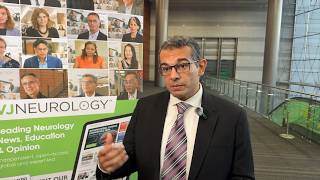
Ahmed Nasreldein, MD, PhD, Assiut University, Assiut, Egypt, comments on the need for practical changes to help first-contact clinicians recognize atypical stroke presentations in women sooner, highlighting that women experience a greater pre-hospital delay compared with men. Prof. Nasreldein suggests training healthcare professionals to diagnose stroke in women and increasing awareness among women to seek immediate medical attention if they experience unusual symptoms. This interview took place at the 18th World Stroke Congress (WSC) in Seoul, Korea.
These works are owned by Magdalen Medical Publishing (MMP) and are protected by copyright laws and treaties around the world. All rights are reserved.
Transcript
I think the most common problem is that women experience pre-hospital delay statistically significantly more than men. And this is because women tend to be misdiagnosed more frequently than men. So I think the first step to overcome this is to train healthcare professionals about how to diagnose stroke in women because women tend to present with more atypical presentations than men. So if a woman presents with acute non-localizing symptoms, she should get urgent imaging, brain imaging to exclude cerebral vascular accidents...
I think the most common problem is that women experience pre-hospital delay statistically significantly more than men. And this is because women tend to be misdiagnosed more frequently than men. So I think the first step to overcome this is to train healthcare professionals about how to diagnose stroke in women because women tend to present with more atypical presentations than men. So if a woman presents with acute non-localizing symptoms, she should get urgent imaging, brain imaging to exclude cerebral vascular accidents. The second step is to increase awareness among women, especially older women who are living alone without any company with them. So we should direct their attention to the fact that if they are experiencing any unusual symptoms like headache, heaviness, speech disturbance, they should go directly to the hospital or call the ambulance directly.
This transcript is AI-generated. While we strive for accuracy, please verify this copy with the video.
Read more...