WSC 2026 | World Stroke Organization launches Rehabilitation Certification Program
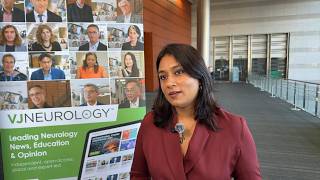
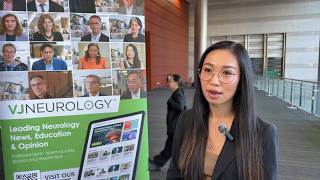
At the 2026 World Stroke Congress (WSC), the World Stroke Organization (WSO) launched the Rehabilitation Certification Program. In this discussion, Elizabeth Lynch, PhD, Flinders University, Adelaide, Australia, and Jessica Nolan, PhD, Curtin University, Perth, Australia, discuss the development and implementation of the program. They explain that the program comprises 55 recommendations across service and patient levels, developed through systematic review of high-quality guidelines and refined through pilot testing at 15 sites across six low- and middle-income countries. The certification framework offers three tiers with varying thresholds for mandatory and recommended criteria, designed to be feasible and relevant across diverse resource settings. This interview took place at the WSC 2026 in Seoul, South Korea.
These works are owned by Magdalen Medical Publishing (MMP) and are protected by copyright laws and treaties around the world. All rights are reserved.
Transcript
Elizabeth Lynch
Hello, my name’s Associate Professor Elizabeth Lynch from Flinders University in Adelaide, Australia.
Jessica Nolan
Hello, I’m Jess Nolan from Curtin University in Perth, Australia.
Elizabeth Lynch
So we’ve been working together on the World Stroke Organization Rehabilitation Certification Program...
Elizabeth Lynch
Hello, my name’s Associate Professor Elizabeth Lynch from Flinders University in Adelaide, Australia.
Jessica Nolan
Hello, I’m Jess Nolan from Curtin University in Perth, Australia.
Elizabeth Lynch
So we’ve been working together on the World Stroke Organization Rehabilitation Certification Program. Perhaps you can talk about why we need it.
Jessica Nolan
Thank you. So the reason that we developed a rehabilitation certification program was that rehabilitation we know is important after stroke. It’s recognized as one of the four key priorities for reducing the global burden of stroke. But we know that access and quality of rehabilitation are globally inequitable. So a certification program that promotes adherence to evidence-based recommendations, we think that this will raise the bar of rehabilitation globally. We know that there has been an effective acute certification program, so the rehabilitation program builds on the acute certification.
Elizabeth Lynch
And so we’ve worked with a really big team to create data points of what we need to look at to see whether or not a site gets certified or not. So I worked with a team, another international team, on the International Stroke Rehabilitation Recovery Alliance Centers of Clinical Excellence piece of work which was looking at what do we think how can we identify rehabilitation centers that are doing a really good job that are that are really advancing the field and so we came up with a set of criteria.
Jessica Nolan
And then so we also worked with Liz and her team and a set of guideline experts. So there were ISRA, the International Stroke Rehabilitation and Recovery Alliance, was one of the groups that worked towards building this certification program. And then there were two additional groups. One was a group of guideline experts, and Liz was one of those experts as well. And I was part of the CareMap group, which is a future leaders group from the WSO that was led by Dorcas Gandhi and Jussara Baggio, that aims to raise rehabilitation standards in Brazil and India. So the two groups came together and looked at what we were going to do and how we were going to go about compiling standards for rehabilitation delivery. So do you want to talk about what your group did, the guideline experts group?
Elizabeth Lynch
Sure. So we went through the different guidelines from, we did initially try to go through low middle income countries and high income countries, but then the guidelines from low middle income countries were adapted from the high income countries anyway. So then we just looked at the guidelines from the high income countries, the high-quality guidelines and went through and found recommendations that were based on strong evidence that there was very clear markers that this is things you should be doing in rehabilitation.
Jessica Nolan
And our group started by looking at the 2023 recommendations that were authored, the first author was Gillian Mead. Those recommendations addressed both acute and rehabilitation care, but the authors had also acknowledged that they might not be applicable in low and middle income countries. So we looked at those guidelines and then compared them with the Australia and New Zealand living guidelines because they’re updated as evidence emerges and we know that they use the rigorous grade framework and then we also compared those guidelines with international synthesis of guidelines so any guidelines that came up in one or more sets of guidelines were then with strong recommendations were then taken forward and then discussed with the other groups.
Elizabeth Lynch
So eventually we came up with a set of markers about what the service should be doing, so how to set up your rehabilitation service, and then what sort of care you should be delivering, what each patient should be receiving. And so we’ve come up with?
Jessica Nolan
We’ve got 55 recommendations in total, so nine address service level recommendations. So they’re things like that can’t be measured through an audit of files but there will be evidence that the site has a quality improvement program performance development program that they’re if they’re an advanced center they’re engaging in research and outreach and they have a documentation system that enables auditing so the service level recommendations are those kind of things. And patient level recommendations are, of course, recommendations that provide evidence of evidence-based care.
Elizabeth Lynch
We have three tiers of certification. So we have minimal for people that are just starting out, particularly in low resource settings, essential services, which are kind of midway. And then there’s advanced, which is initially in our heads, we’re thinking that would mostly high-income countries but in certainly in terms of the pilot that’s we’ve found that middle-income countries can also achieve advanced certification
Jessica Nolan
Yeah that’s right. And then we also so then we piloted this and so we piloted the program at 15 sites in six low and middle-income countries across three continents then after we did the pilots we came back and made sure that the recommendations that we were assessing were feasible and relevant to the sites and we also had on each group that worked towards this we had representation from people with from low and middle income countries who were able to tell us which recommendations were appropriate in particularly minimal and essential services, but also they were able to give us more information about recommendations that we should probably continue to keep in there about practices to avoid. So they were able to tell us things, for example, that might be potentially harmful, like use of shoulder pulleys for someone with hemiplegia and they were able to tell us if this was still common practice in their countries which sometimes it was so we knew that we needed to leave those recommendations in.
Elizabeth Lynch
So the program is being launched tomorrow which is very exciting so there will be three sites being certified and it’s been a lot of work and now now we’ve got to the good stuff where we’re actually working with sites to present certificates or help them work to the point you know there’s there’s many sites from the pilot trial that are just need to do a little bit more work to get over the lines and sometimes it’s just about showing us the documentation sometimes it’s about changing the way they’re documenting to be able to demonstrate what they’re doing.
Jessica Nolan
Mandatory criteria are those that are for patient level recommendations. They are supported by high certainty evidence. So all of our criteria are strong recommendations from the GRADE framework, but GRADE allows strong recommendations to be still supported by moderate or low certainty evidence if that it’s likely to apply to a high proportion of stroke survivors or if it’s very clear that the benefit is likely to outweigh the risk. So we have strong recommendations. Our program is full of strong recommendations but there was only one patient level criterion that was supported by high certainty evidence and that was task specific training of walking. So that’s the only mandatory patient-level criteria criteria. The mandatory service-level criteria are criteria that are necessary to enable audit so things like a documentation system and a quality improvement system, so we expect that the site is continuing to engage in quality improvement and professional development, and then we also had mandatory criteria for advanced centers that relate to the ISRA criteria. So to achieve certification, minimal and essential sites need to meet all of the mandatory criteria and 75% of recommended criteria for that level and advanced sites need to meet 85% of criteria for that level. That’s at first certification. At second certification, minimal and essential sites also need to meet 85 percent of recommended criteria and advanced sites need to show that they’re continuing to improve.
This transcript is AI-generated. While we strive for accuracy, please verify this copy with the video.
Read more...