EAN 2026 | One big question with Manuel Toledo: what epilepsy advance could transform care in the next 3 years?
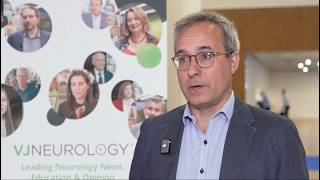
Manuel Toledo, MD, PhD, VHIR Vall d’Hebron Institut de Recerca, Barcelona, Spain, discusses the key advances in epilepsy that could transform care in the next three years. Dr Toledo highlights the development of more patient-friendly seizure monitoring devices as a major near-term advancement, while noting that disease-modifying therapies represent one of the most promising long-term goals for epilepsy treatment. This interview took place at the 12th Congress of the European Academy of Neurology (EAN) in Geneva, Switzerland.
These works are owned by Magdalen Medical Publishing (MMP) and are protected by copyright laws and treaties around the world. All rights are reserved.
Transcript
In the next three years, of course, the upcoming devices, like I say, rings or devices that are user-friendly. One of the main problems in epilepsy is that most of the devices say, “I have epilepsy” or “I have epilepsy,” and it’s a stigmatized disease, something that we try to struggle against. But patients with epilepsy, at least in Europe, they don’t feel comfortable with something that identifies them as having epilepsy...
In the next three years, of course, the upcoming devices, like I say, rings or devices that are user-friendly. One of the main problems in epilepsy is that most of the devices say, “I have epilepsy” or “I have epilepsy,” and it’s a stigmatized disease, something that we try to struggle against. But patients with epilepsy, at least in Europe, they don’t feel comfortable with something that identifies them as having epilepsy. So friendly-use devices that are able to merge with AI solutions to decide whether they have epilepsy or more severe epilepsy, to be able to control and to have an objective relate to the doctors, that will be the change. And of course, upcoming treatments that I don’t think will be in the next three or five years, but maybe later on, we will have a big difference in the treatments of epilepsy.
I will say now there is a revolution because so far we have been treating seizures, meaning modifying the neurons not to seize, not to have electric discharges. However, even in this meeting, we have different companies which are investing in modifying the neurons. So DNA-modifying therapies or RNA-modifying therapies that may change the progression or the evolution of the disease in the forthcoming future.
This transcript is AI-generated. While we strive for accuracy, please verify this copy with the video.
Read more...