AAN 2026 | Tolebrutinib in a North American cohort with NRSPMS: subgroup analysis of HERCULES
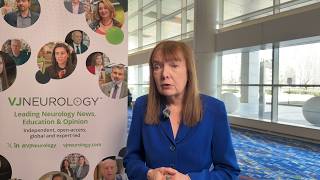
Patricia Coyle, MD, Stony Brook Medicine, Lake Grove, NY, discusses a subgroup analysis of the Phase III HERCULES study (NCT04411641), focusing on the North American cohort receiving tolebrutinib for non-relapsing secondary progressive multiple sclerosis (NRSPMS). The analysis showed a significant benefit of the BTK inhibitor in this cohort. This interview took place at the 78th American Academy of Neurology (AAN) Annual Meeting in Chicago, IL.
These works are owned by Magdalen Medical Publishing (MMP) and are protected by copyright laws and treaties around the world. All rights are reserved.
Transcript
Of course, there’s always a concern in studies around the time of the pandemic and then with the Ukraine war, et cetera, where they recruit from outside the United States and there are not a lot of North American individuals that participate in this study. In HERCULES, this was the case. North Americans made up about 14.3% of the patients entered into that study of a BTK inhibitor versus placebo in non-relapsing secondary progressive MS...
Of course, there’s always a concern in studies around the time of the pandemic and then with the Ukraine war, et cetera, where they recruit from outside the United States and there are not a lot of North American individuals that participate in this study. In HERCULES, this was the case. North Americans made up about 14.3% of the patients entered into that study of a BTK inhibitor versus placebo in non-relapsing secondary progressive MS. About two-thirds were from the United States and one-third from Canada. And indeed, you saw even in this subset analysis, and of course, the numbers are more limited. There were 162 cases that were entered into this subset analysis. But if you look at it, they certainly had a benefit in being less likely to develop the six-month confirmed disability progression. In fact, that was 54% lowered compared to 31% in the overall study. And if you looked at the United States, it was a 62% decrease. So you really had a strong impact in favor of the BTK inhibitor. The other interesting thing was that in this North American cohort, only 4.4% had contrast lesions at entry compared to 12.7% in the whole study. Yet those patients had a very strong impact on progression. Now normally, contrast-enhancing lesions would be a relapsing component, and you would think you might get a relapsing treatment response, not a true progression treatment response. But this study kind of gave data saying that you were indeed seeing a true progression impact.
This transcript is AI-generated. While we strive for accuracy, please verify this copy with the video.
Read more...

Disclosures
Dr. Coyle has received personal compensation in the range of $500-$4,999 for serving as a Consultant for Accordant. Dr. Coyle has received personal compensation in the range of $500-$4,999 for serving as a Consultant for Amgen. Dr. Coyle has received personal compensation in the range of $50,000-$99,999 for serving as a Consultant for Sanofi Genzyme. Dr. Coyle has received personal compensation in the range of $10,000-$49,999 for serving as a Consultant for Novartis. Dr. Coyle has received personal compensation in the range of $10,000-$49,999 for serving as a Consultant for GlaxoSmithKline. Dr. Coyle has received personal compensation in the range of $10,000-$49,999 for serving as a Consultant for Horizon Therapeutics. The institution of Dr. Coyle has received research support from CorEvitas LLC. The institution of Dr. Coyle has received research support from Genentech/Roche. The institution of Dr. Coyle has received research support from NINDS. The institution of Dr. Coyle has received research support from Sanofi Genzyme. The institution of Dr. Coyle has received research support from Cleveland Clinic.