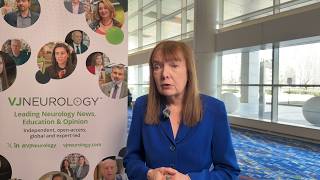
AAN 2026 | Efficacy of tolebrutinib in non-relapsing and relapsing MS: insights from pivotal Phase III trials
Patricia Coyle, MD, Stony Brook Medicine, Lake Grove, NY, discusses the results of the Phase III HERCULES (NCT04411641) trial, which showed the efficacy of tolebrutinib in non-relapsing secondary progressive multiple sclerosis (MS). Dr Coyle highlights that while two concurrent Phase III trials in patients with relapsing MS failed to meet their primary outcome, the data suggested a potential effect in favor of tolebrutinib. This interview took place at the 78th American Academy of Neurology (AAN) Annual Meeting in Chicago, IL.
These works are owned by Magdalen Medical Publishing (MMP) and are protected by copyright laws and treaties around the world. All rights are reserved.
Transcript
The HERCULES study was a Phase III study that focused on non-relapsing secondary progressive MS. It was a randomized, placebo-controlled, double-blind, event-driven study. It entered 1,131 individuals. They had to have been free of any clinical relapse in the prior two years and had to have progressed in the year prior to entry. They ranged in age from 18 to 60 with an EDSS of 3 to 6.5. The primary outcome was six-month confirmed disability progression that was significantly slowed in favor of the BTK inhibitor, a 31% decrease in progression with the oral BTK inhibitor...
The HERCULES study was a Phase III study that focused on non-relapsing secondary progressive MS. It was a randomized, placebo-controlled, double-blind, event-driven study. It entered 1,131 individuals. They had to have been free of any clinical relapse in the prior two years and had to have progressed in the year prior to entry. They ranged in age from 18 to 60 with an EDSS of 3 to 6.5. The primary outcome was six-month confirmed disability progression that was significantly slowed in favor of the BTK inhibitor, a 31% decrease in progression with the oral BTK inhibitor. The interesting thing in the two Phase III relapsing trials that read out at the same time, they failed because there was a direct comparator, teriflunomide, and the primary outcome was annualized relapse rate. And it didn’t beat teriflunomide, although the annualized relapse rate was low across the board. But when you looked at confirmed disability worsening in this relapsing cohort, the graph separated in favor of the BTK inhibitor. So even though you can’t count that because the primary outcome was negative, it really indicated that you were likely seeing an effect on PIRA in those relapsing patients, confirming an impact on progression in MS.
This transcript is AI-generated. While we strive for accuracy, please verify this copy with the video.
Read more...

Disclosures
Dr. Coyle has received personal compensation in the range of $500-$4,999 for serving as a Consultant for Accordant. Dr. Coyle has received personal compensation in the range of $500-$4,999 for serving as a Consultant for Amgen. Dr. Coyle has received personal compensation in the range of $50,000-$99,999 for serving as a Consultant for Sanofi Genzyme. Dr. Coyle has received personal compensation in the range of $10,000-$49,999 for serving as a Consultant for Novartis. Dr. Coyle has received personal compensation in the range of $10,000-$49,999 for serving as a Consultant for GlaxoSmithKline. Dr. Coyle has received personal compensation in the range of $10,000-$49,999 for serving as a Consultant for Horizon Therapeutics. The institution of Dr. Coyle has received research support from CorEvitas LLC. The institution of Dr. Coyle has received research support from Genentech/Roche. The institution of Dr. Coyle has received research support from NINDS. The institution of Dr. Coyle has received research support from Sanofi Genzyme. The institution of Dr. Coyle has received research support from Cleveland Clinic.