UK Stroke Forum 2025 | The evolving role of carotid endarterectomy for stroke in the era of optimized medical management
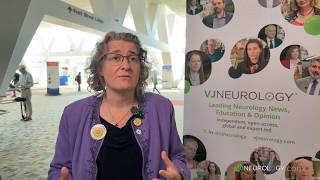
Alun Davies, MA, DM, FRCS, DSc, FHEA, FEBVS, FACPh, FLSW, FMedSci, Imperial College London, London, UK, discusses the use of carotid endarterectomy in patients who have had a stroke in the era of optimized medical management. Prof. Davies shares insights into which patient subgroups still benefit from carotid endarterectomy and discusses the need for further trials to investigate this. This interview took place at the UK Stroke Forum (UKSF) 2025 Conference in Aberdeen, UK.
These works are owned by Magdalen Medical Publishing (MMP) and are protected by copyright laws and treaties around the world. All rights are reserved.
Transcript
Carotid endarterectomy is traditionally used for both symptomatic and asymptomatic patients. Basically, the symptomatic patients are patients who have either presented with a TIA or stroke and have at least a 50% narrowing of their internal carotid artery on duplex examination. However, the majority of people would actually use a threshold of 70% using the NASCET criteria. With respect to patients who are asymptomatic, we usually use a threshold of greater than 70% or 80% on NASCET criteria, but also look for some other signs such as TCD or other imaging to suggest that there may have been an embolic event...
Carotid endarterectomy is traditionally used for both symptomatic and asymptomatic patients. Basically, the symptomatic patients are patients who have either presented with a TIA or stroke and have at least a 50% narrowing of their internal carotid artery on duplex examination. However, the majority of people would actually use a threshold of 70% using the NASCET criteria. With respect to patients who are asymptomatic, we usually use a threshold of greater than 70% or 80% on NASCET criteria, but also look for some other signs such as TCD or other imaging to suggest that there may have been an embolic event. There has been, in the last 10 to 15 years, a great push to do carotid endarterectomy in symptomatic patients within two weeks. This is based on fairly old data. There is now increasing data to suggest that if you treat these patients with best medical therapy, there is actually no urgent need to perform urgent carotid endarterectomy. And there is even some question as to whether some patients would be better off just having best medical therapy and not having a carotid revascularization. And this is the reason that there are a number of us who think that further trials are needed in the symptomatic group of those patients who have over a 70% stenosis and are taking best medical therapy. Unfortunately, there is no obvious biomarker that is available to suggest who may or may not benefit from carotid endarterectomy. The standard clinical questions in those patients who are symptomatic, looking at age, looking to see who’s got the longest to benefit, or if they can’t take best medical therapy, these are all maybe groups that one needs to consider, or people who have had events on best medical therapy, therefore they may be another high-risk group who would benefit from carotid endarterectomy. With respect to the asymptomatic group, things such as TCD, carotid plaque morphology, cross-sectional imaging, looking for silent infarcts, are all factors that may actually need to be considered to weigh the pros and cons of offering carotid re-vascularization.
This transcript is AI-generated. While we strive for accuracy, please verify this copy with the video.
Read more...