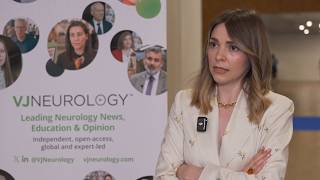
EEC 2026 | Recognizing the burden of secondary epilepsy in global health estimates
Jakob Christensen, MD, PhD, Aarhus University Hospital, Aarhus, Denmark, discusses the importance of recognizing the burden of secondary epilepsy in global health estimates. Prof. Christensen highlights that these cases are often not included in epilepsy burden estimates, resulting in a significant underestimation of the true burden of epilepsy worldwide. This interview is part of our virtual coverage of the 16th European Epilepsy Congress (EEC), which took place in Athens, Greece.
These works are owned by Magdalen Medical Publishing (MMP) and are protected by copyright laws and treaties around the world. All rights are reserved.
Transcript
The secondary epilepsy is characterized to be secondary to some kind of lesion to the brain. It could be from traumatic brain injury, stroke, or tumor. And it’s of course difficult to disentangle whether it’s the seizures or the underlying pathology, such as a stroke, that accounts for most of the burden. But there’s no doubt that additional seizures on top of a brain that is already damaged is very harmful and has a large impact on the recovery of these patients...
The secondary epilepsy is characterized to be secondary to some kind of lesion to the brain. It could be from traumatic brain injury, stroke, or tumor. And it’s of course difficult to disentangle whether it’s the seizures or the underlying pathology, such as a stroke, that accounts for most of the burden. But there’s no doubt that additional seizures on top of a brain that is already damaged is very harmful and has a large impact on the recovery of these patients. So, it’s important to include these patients in the overall estimate of epilepsy burden worldwide. The global burden of disease studies estimate the burden of different disorders, including epilepsy. And epilepsy is characterized by a lot of underlying disorders. But epilepsy, for example, secondary to stroke, is not included. So, the burden in persons with epilepsy secondary to stroke is included in the stroke category and not in the epilepsy category. And so what is the only category included in the epilepsy category is those with epilepsy without any known underlying etiology. So that’s around 50% of the population with epilepsy that is included in the global burden of epilepsy studies, so that, of course, underestimates the burden associated with epilepsy significantly, so we try to work with the global burden of disease group to get those estimates more precise to reflect the impact of epilepsy overall worldwide.
This transcript is AI-generated. While we strive for accuracy, please verify this copy with the video.
Read more...