Academic History
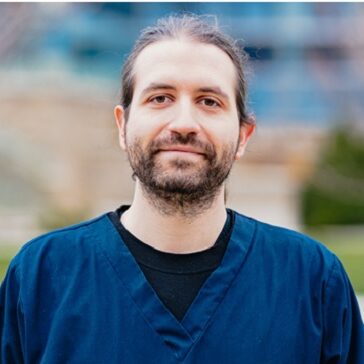
Aristeidis Katsanos, MD, PhD, is a Vascular Neurologist at Hamilton Health Sciences, Ontario, Canada, and an Assistant Professor of Neurology at McMaster University, Ontario, Canada. He also serves as an Investigator at the Population Health Research Institute (PHRI), Ontario, Canada.
Dr Katsanos completed his medical degree at the University of Ioannina, Greece, where he later specialized in Neurology and completed his PhD with a focus on transesophageal echocardiography and its diagnostic role in stroke. Following his neurology training, he undertook a six-month European Academy of Neurology Research Fellowship at Ruhr University of Bochum, Germany. He then pursued a two-year stroke fellowship at McMaster University’s Division of Neurology, further solidifying his expertise in vascular neurology and clinical research.
Dr Katsanos has an extensive academic and editorial portfolio, serving as an Associate Editor for Frontiers in Neurology, Academic Editor for PLoS One, and a member of the Editorial Boards for Stroke, European Stroke Journal, and the Journal of Neuroimaging. He is actively involved in various professional committees, including the Guidelines Committee and Young Stroke Physicians & Researchers Committee of the European Stroke Organisation (ESO), the Digital Content Committee of the Canadian Stroke Consortium, and the Communications Advisory Group of the PHRI.
He has published over 200 papers and more than 60 abstracts in high-impact journals, achieving more than 5,000 citations and an H-index of 43.
Speaking on Advanced Stroke Interventions and Secondary Prevention
Dr Katsanos speaks about emerging therapeutic approaches for stroke, including acute management and long-term prevention. He discusses a range of key clinical topics, such as optimal head positioning, the use of reteplase, and MMA embolization in acute stroke treatment, alongside the broader utility of tenecteplase and decompressive hemicraniectomy in cases of deep intracerebral hemorrhage.
In secondary prevention, he investigates colchicine’s potential for reducing recurrent cardiovascular events post-stroke, as seen in his CoVasc-ICH trial (NCT05159219) and other studies assessing anti-inflammatory agents.