ECTRIMS 2025 | The use of bendamustine for lymphodepletion prior to CAR-T in MS: insights from a Phase I study
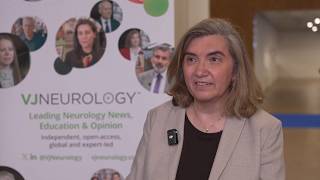
Jeffrey Dunn, MD, Stanford University School of Medicine, Palo Alto, CA, comments on the use of bendamustine for lymphodepletion prior to CAR T-cell therapy in multiple sclerosis (MS), sharing insights from a Phase I trial (NCT06138132). He explains that while cyclophosphamide and fludarabine are conventionally used for lymphodepletion, bendamustine was chosen in this study for several key reasons. This interview took place at the 41st Congress of the European Committee for Treatment and Research in Multiple Sclerosis (ECTRIMS) in Barcelona, Spain.
These works are owned by Magdalen Medical Publishing (MMP) and are protected by copyright laws and treaties around the world. All rights are reserved.
Transcript
When you introduce, essentially, a foreign receptor on the surface of the patient’s own cells, and our study uses T-cells collected autologously, there are studies in the future that are planned that will look at allogeneic T-cells, and those will be T-cells collected from other donors that might partially be matched but would be an off-the-shelf product. Our study used autologous, in other words, the patient’s own cells that were engineered to express this B-cell recognition site...
When you introduce, essentially, a foreign receptor on the surface of the patient’s own cells, and our study uses T-cells collected autologously, there are studies in the future that are planned that will look at allogeneic T-cells, and those will be T-cells collected from other donors that might partially be matched but would be an off-the-shelf product. Our study used autologous, in other words, the patient’s own cells that were engineered to express this B-cell recognition site. Because we’re giving cells that are not 100% the patient’s own once they’re engineered, we need to clear some space so that the cells, when they’re infused, are not recognized by the subject as being foreign and don’t induce a significant immune-associated reaction for the purposes of self-defense. We do that with lymphodepletion. We suppress the immune system just a little bit, again, so that we can clear space. And so these cells re-infused into the patient, which are mostly their cells and recognize mostly as self, still can have space to not be attacked so that they can gain a foothold and so that they can begin to expand so that they can be effective. The primary lymphodepletion regimen that’s been used in most studies in this new field tends to use cyclophosphamide and fludarabine, or what’s been called Cy-Flu, as the lymphodepletion or conditioning regimen. We didn’t do that in this study, in our study. For a number of reasons, we used bendamustine, which is an alkylating agent. But bendamustine is, we thought, a little better tolerated, not so much associated with hair loss. So we thought it would be good or more comfortable for patients to consent and proceed. But mostly we did this to minimize the risk of potential cytopenia. Bendamustine, we think, is a little bit more mild than the Cy-Flu regimen. And there have been cases of fludarabine-associated white matter changes of the cerebrum of the brain in some of the pediatric literature that’s not, to our knowledge, been associated with bendamustine. Finally, one more thing, both cyclophosphamide, and fludaribine is closely associated with another molecule called cladribine that had been used and found to have some impact on the natural history of multiple sclerosis in previous trials. And so we wanted to try to minimize that potential confounder with using an agent that was more specific.
This transcript is AI-generated. While we strive for accuracy, please verify this copy with the video.
Read more...