The Sleep Disorders Channel is supported through educational grants from Alkermes and Takeda.
VJNeurology is an independent medical education platform. Channel supporters have no influence over the production of content.
What’s changed in the 2025 AASM CSA guideline: new roles for ASV and phrenic nerve stimulation
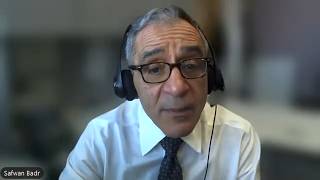
M. Safwan Badr, MD, Wayne State University School of Medicine, Detroit, MI, outlines the key changes made in the 2025 American Academy of Sleep Medicine (AASM) clinical practice guideline for the treatment of central sleep apnea (CSA). Prof. Badr explains that all recommendations are conditional and center on positive airway pressure (PAP) therapies. These changes include a suggestion against bilevel PAP (BPAP) without a backup rate, a new conditional recommendation for transvenous phrenic nerve stimulation, and a conditional recommendation for adaptive servo-ventilation (ASV) in expert centers. This interview was recorded on a virtual conference call with VJNeurology.
These works are owned by Magdalen Medical Publishing (MMP) and are protected by copyright laws and treaties around the world. All rights are reserved.
Transcript
Well, these guidelines were developed using GRADE methodology. So this is a systematic review and a systematic way of getting to the answer. You have to trust the process. So it’s not consensus-based. It’s not expert opinion. The major recommendations fall in multiple categories. The main one is that all the recommendations are provisional. Everything is conditional. Nothing is – it’s all phrased as we suggest, meaning there is room for all of these...
Well, these guidelines were developed using GRADE methodology. So this is a systematic review and a systematic way of getting to the answer. You have to trust the process. So it’s not consensus-based. It’s not expert opinion. The major recommendations fall in multiple categories. The main one is that all the recommendations are provisional. Everything is conditional. Nothing is – it’s all phrased as we suggest, meaning there is room for all of these. So the recommendations really fundamentally is CPAP and other positive pressure modalities such as ASV or BPAP with a backup rate. So one thing that has changed from the previous guidelines, is BPAP bi-level without a backup rate is now suggest against. And the reason is that’s in and of itself destabilizing. It actually could trigger central apnea if the pressure support level is high enough for a given individual. The other thing is that we made no recommendations on hypnotics because there’s not enough evidence that can be run through a systematic review. The other two recommendations more or less haven’t changed. Acetazolamide and oxygen is two things that influence chemical control of ventilation have not really changed more or less. And the most recent one is that TPNS, phrenic nerve stimulation, is now in a new therapy. It’s now also a conditional recommendation four. So these are fundamentally the kind of the general changes since the previous one. Actually, one important one that has changed is ASV, which in the revision in 2015 was recommended against as a contraindicated given the new literature that has emerged. Now it is viewed just like any other is conditional for with the caveat that it should be done in a center with expertise in managing these patients. As opposed to a center that sees one or two patients a year.
This transcript is AI-generated. While we strive for accuracy, please verify this copy with the video.
Read more...