The Sleep Disorders Channel is supported through educational grants from Alkermes and Takeda.
VJNeurology is an independent medical education platform. Channel supporters have no influence over the production of content.
Sleep Europe 2026 | The diagnostic paradox in sleep apnea: when physiological severity and symptoms don’t match
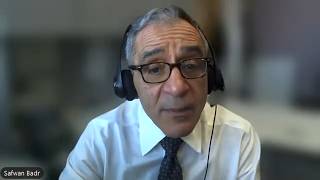
Dirk Pevernagie, MD, PhD, Ghent University, Ghent, Belgium, discusses how sleep medicine was founded in physiology, from the introduction of EEG to polysomnography, which remains the standard diagnostic approach for sleep apnea. Prof. Pevernagie explains that measures such as the apnea-hypopnea index (AHI) grade severity as mild, moderate or severe, but this does not always match patients’ symptoms. This creates a paradox, with some patients with severe obstructive sleep apnea having minimal symptoms and others with severe symptoms not meeting diagnostic criteria. This interview took place at Sleep Europe 2026 in Maastricht, the Netherlands.
These works are owned by Magdalen Medical Publishing (MMP) and are protected by copyright laws and treaties around the world. All rights are reserved.
Transcript
Sleep is founded in physiology. Right from the start, right from the very first explorations of sleep with Hans Berger and the introduction of the EEG, it was about the recording of biological signals. And that was the right starting place. So this recording of biological signals was then expanded with cardiorespiratory signals and many other signals, so that led to a standard and a paradigm and a diagnostic approach, which is polysomnography, that is where it all started, and so actually, the clinical field of sleep medicine is founded on this approach, which is a good approach...
Sleep is founded in physiology. Right from the start, right from the very first explorations of sleep with Hans Berger and the introduction of the EEG, it was about the recording of biological signals. And that was the right starting place. So this recording of biological signals was then expanded with cardiorespiratory signals and many other signals, so that led to a standard and a paradigm and a diagnostic approach, which is polysomnography, that is where it all started, and so actually, the clinical field of sleep medicine is founded on this approach, which is a good approach. But when we look at the measures that we have, for instance, in respiratory, we have the apnea-hypopnea index. We also have measures of hypoxia and others. If you look at those, you can grade the severity of disorders based on those measures. And traditionally, the severity of the disorder is graded as mild, moderate, or severe. But if you match those observations with what patients tell you, there’s not always a match. Sometimes it matches, so patients with little physiological exposure who have minor symptoms, minor complaints, and others who are severely affected in terms of physiological exposure who have severe complaints. Then it matches, but you also have the opposite: patients with minimal symptoms who have very severe OSA in physiological terms, and patients with severe symptoms who don’t meet the diagnostic criteria for sleep apnea, in this case. So there you have a mismatch. And that’s the paradox. And if we only think in physiological terms, we have no good way to treat the patients in whom the paradox is present, so that’s the basis of my talk, actually.
This transcript is AI-generated. While we strive for accuracy, please verify this copy with the video.
Read more...