EAN 2026 | Evolving management of motor symptoms in Parkinson’s disease
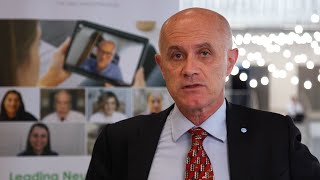
Carlo Colosimo, MD, FEAN, Sapienza University of Rome, Rome, Italy, discusses the evolving management of Parkinson’s disease, emphasizing that despite major advances in treating non-motor symptoms, optimizing motor symptom control remains a central goal of care. He highlights the growing range of therapeutic options and the importance of individualized, patient-centered treatment decisions in the absence of extensive head-to-head comparative evidence. This interview took place at the 12th Congress of the European Academy of Neurology (EAN) in Geneva, Switzerland.
These works are owned by Magdalen Medical Publishing (MMP) and are protected by copyright laws and treaties around the world. All rights are reserved.
Transcript
First, I have to start by telling that motor symptoms, which are the core of Parkinson’s disease, have been a little bit forgotten in the past few years because of a lot of emphasis on the equally important non-motor symptoms. But I think most of us, the clinicians caring for Parkinson’s disease, would agree that treating well motor symptoms is still the most important duty for us when we encounter somebody with Parkinson’s disease...
First, I have to start by telling that motor symptoms, which are the core of Parkinson’s disease, have been a little bit forgotten in the past few years because of a lot of emphasis on the equally important non-motor symptoms. But I think most of us, the clinicians caring for Parkinson’s disease, would agree that treating well motor symptoms is still the most important duty for us when we encounter somebody with Parkinson’s disease. The choice among different treatments nowadays, we have a lot of them, both for early disease, mid-stage disease and advanced disease, going from oral therapies to transdermal therapies to infusion therapies to surgical therapies; still, the choice is very much a matter of our experience as a physician and, even more important, the patient’s choice. And, unfortunately, there is still not very much in terms of evidence-based medicine comparing the different treatments. So, most of the evidence-based medicine in this field comes from comparisons between an active drug and a placebo, and all these drugs work well; all these treatments work well, but there is very little in terms of comparing them, so in guiding the choice, it’s really important what the patient wants, number one, and number two is important: our experience, how to get the best approach for that single, specific patient according to his or her needs, so it’s still a matter of mastering the therapy of Parkinson’s disease.
This transcript is AI-generated. While we strive for accuracy, please verify this copy with the video.
Read more...