The Sleep Disorders Channel is supported through educational grants from Alkermes and Takeda.
VJNeurology is an independent medical education platform. Channel supporters have no influence over the production of content.
EAN 2026 | Counselling patients with RBD about the associated risks of neurodegenerative disease
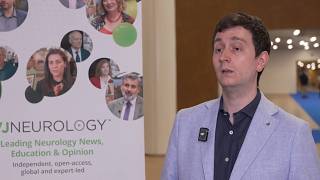
Luca Baldelli, MD, PhD, University of Bologna, Bologna, Italy, shares guidance for counselling patients with REM sleep behavior disorder (RBD) about the associated risks of neurodegenerative disease. Dr Baldelli emphasizes the importance of individualized counselling and using clear language and a positive approach. This interview took place at the 12th Congress of the European Academy of Neurology (EAN) in Geneva, Switzerland.
These works are owned by Magdalen Medical Publishing (MMP) and are protected by copyright laws and treaties around the world. All rights are reserved.
Transcript
This is a very important topic and maybe a tricky topic. Indeed, it has been found that by a large part of the literature that RBD may be a harbinger of a subsequent neurodegeneration, the development specifically of an alpha-synucleinopathy, such as Parkinson’s disease, dementia with Lewy bodies, or multiple system atrophy. The problem is that nowadays we cannot predict with certainty, but even if with less certainty, who will actually convert to this condition and when, and what trajectory will the patient follow...
This is a very important topic and maybe a tricky topic. Indeed, it has been found that by a large part of the literature that RBD may be a harbinger of a subsequent neurodegeneration, the development specifically of an alpha-synucleinopathy, such as Parkinson’s disease, dementia with Lewy bodies, or multiple system atrophy. The problem is that nowadays we cannot predict with certainty, but even if with less certainty, who will actually convert to this condition and when, and what trajectory will the patient follow. And I think this is actually important to individualize the message for the patient and also ask the patient and try to understand what the patient actually wants to know. It is important first to disclose at least what REM sleep behavior disorder means to the patient. It is important to empower the patient and not to hide anything from the patient. It may be useful to use different kinds of vocabulary, different kinds of language to make the patient better understand. For example, even if it’s just personal experience, what I’ve been doing in my clinic is introducing the patients that are isolated RBD, maybe it is actually a disorder of aging. So it means that some parts of his brain are actually aging. That aging maybe is actually a normal phenomenon happening to everyone and sometimes aging could go a little bit faster. So this is a sign of an aging brain. This doesn’t mean that the patient will certainly develop Parkinson’s or other diseases. We do not have the crystal sphere that allows us to forecast the future. But it is important to empower the patient giving this type of information. It should not be negative information. It should be positive, suggesting to have a healthier quality of life and considering that aging is a part of everyone and there are nowadays research trying to define better trajectories but unfortunately not being up to now disease-modifying therapies for this kind of disease. I think it’s very important to individualize the message and to introduce the patient to this topic without being harmful, giving also on the other side unwanted information.
This transcript is AI-generated. While we strive for accuracy, please verify this copy with the video.
Read more...